From Pixels to Polygons: The Evolution Through Remasters
11 June 2026
Let’s take a little journey through time — no DeLorean needed. Remember the first game you ever played? That clunky block of pixels that barely resembled a person but had you glued to the screen for hours? Fast forward a couple of decades, and we’re now swinging across hyper-detailed cities with realistic lighting and ray-traced reflections. What changed? Well, quite a bit actually. And a lot of that change comes wrapped in something we call a “remaster.”
Yep, from grainy sprites to crisply defined polygons, the remaster trend has not only revived the classics but has also played a crucial role in shaping modern gaming. So buckle up — we’re diving into the past, present, and future of game remastering. This isn’t just nostalgia with a fresh coat of paint; it’s an evolution that tells the story of where gaming came from... and where it might be going.
What Exactly Is a Remaster in Gaming?
Before we geek out about polygons and shadow maps, let’s break it down. A remaster is essentially a facelift for an older game. Developers take an existing title and upgrade it — usually in terms of resolution, textures, lighting, and sometimes even the audio. It’s not quite a remake (those rebuild the entire game from scratch), but it goes beyond just slapping on a filter.Imagine watching your favorite childhood movie in 4K with surround sound. It’s still the same story, the same characters, but the experience feels shiny and new. That’s what a good remaster does for a video game.
The Dawn of Pixels: A Humble Beginning
Back in the '70s and '80s, games were built on a foundation of pixels. We're talking chunky, square-shaped pixels that formed everything from spaceships in Galaga to plumbers in Donkey Kong. Hardware limitations meant that creativity had to be squeezed into tiny file sizes, and players were asked to use their imagination — a lot of it.Yet, these games were iconic. The visuals may have been simplistic, but they carried emotional weight. You didn’t need ultra-HD to feel the thrill of defeating Bowser for the first time or the tension of enemies closing in while you desperately tried to line up Tetris blocks.
Enter Polygons: A New Dimension
Then came the '90s — the era of 3D. Suddenly, we had polygons. Games like Super Mario 64 and Final Fantasy VII broke new ground, literally, by adding depth and dimension. Blocky as they might look now, they were revolutionary at the time.Why do polygons matter? Because they were the tech that enabled developers to make characters and environments that felt more alive. While pixel art had its charm, polygons allowed us to move through space, not just across a screen.
With this leap, the industry's gears started turning faster. Graphics improved, engines got more powerful, and so did player expectations. But here's the kicker — many of those early 3D games haven't aged super well. And that's where remasters step in like digital time machines.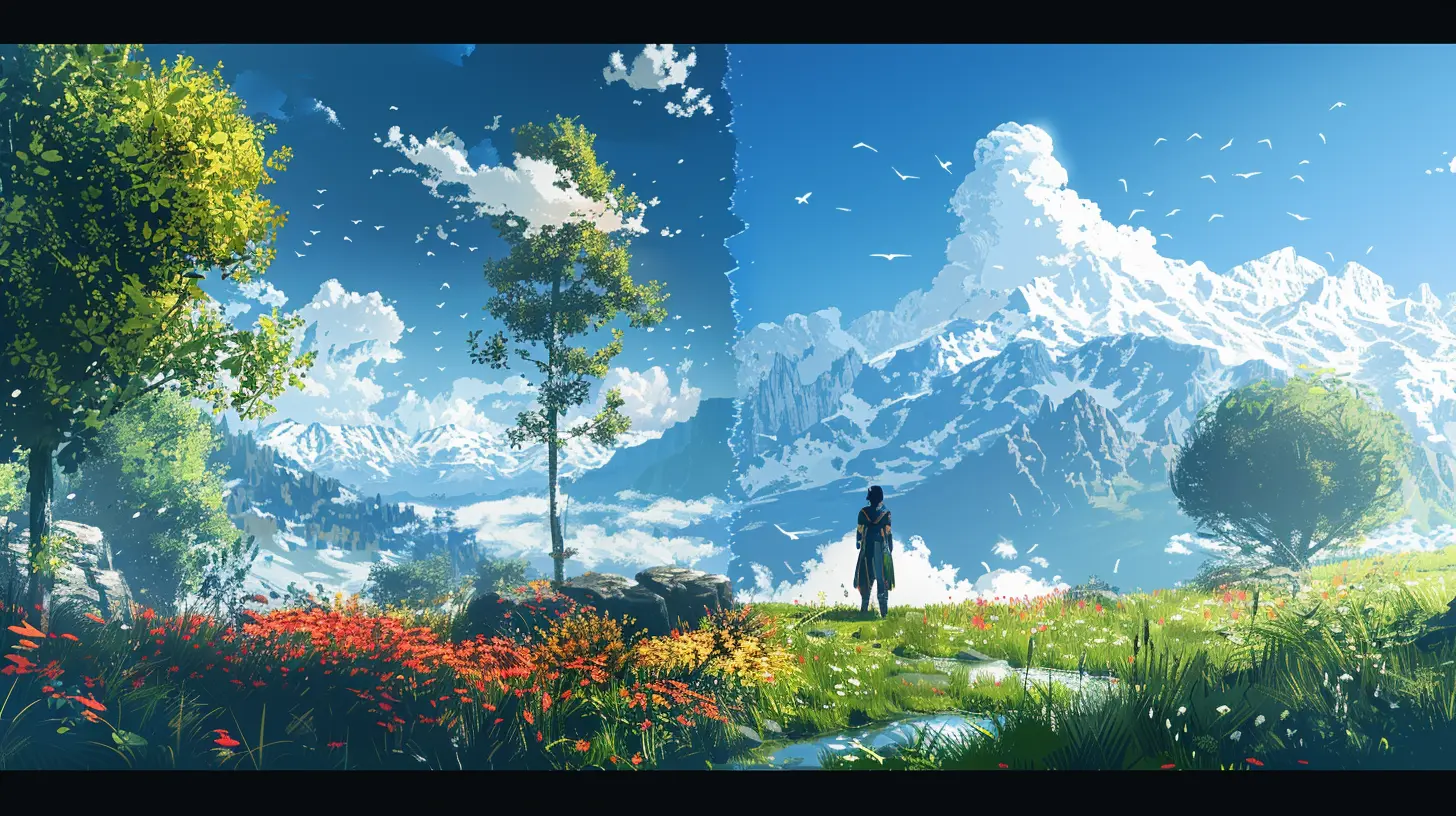
Why Do We Remaster Games?
Here’s the big question: Why not just make new games? Why go back?Well, there are a few reasons:
1. Nostalgia Is a Powerful Drug
Gamers are a sentimental bunch. We form emotional connections with characters and stories. Revisiting them with better visuals and smoother mechanics? That’s catnip.2. A Second Chance at Greatness
Some games were ahead of their time but let down by tech limitations or clunky controls. Remasters offer redemption — a way to polish the legacy.3. New Generations, New Eyes
Many gamers today weren’t around when classics like Metal Gear Solid or System Shock first dropped. A remaster introduces timeless titles to fresh audiences.Not All Remasters Are Created Equal
Let’s be real — not every remaster is a masterpiece. Some just bump up the resolution and call it a day. Others go the extra mile, pouring heart and soul into every frame and pixel.Take The Legend of Zelda: Wind Waker HD. The original was gorgeous, but the HD remaster refined the art style, smoothed out mechanics, and added quality-of-life features. Then you’ve got Halo: The Master Chief Collection, which gave players enhanced graphics, multiplayer support, and access to an entire saga — that's value.
But on the flip side, you've got “cash-grab” remasters that don't justify their asking price. Recycled textures, minimal effort, and no real incentive to replay — those hurt more than help.
The Technical Magic Behind a Good Remaster
Ever wonder what goes on under the hood of a killer remaster? Here's a peek:- Upscaled Textures
Old textures (think of them like digital wallpaper) get cleaned up, sharpened, and enhanced to look good on modern displays.- Frame Rate Upgrades
Many older games were capped at 30 FPS or even lower. Remasters often push that to a silky-smooth 60 FPS.- Audio Overhauls
Better sound effects, re-recorded music, and modern surround mixing are common in top-tier remasters.- Modern Controls
Let’s face it — controls from 2001 feel clunky in 2024. Remasters often tweak inputs to feel more intuitive and responsive.From Preservation to Innovation: More Than a Visual Upgrade
Remasters aren't just about better graphics. At their core, they’re about preservation. Like restoring a classic painting, it's about keeping the original spirit intact while updating it for the modern world.And in doing so, remasters often serve as stepping stones for innovation. Developers revisit their own work, learn from it, and sometimes lay the groundwork for sequels or spiritual successors.
A perfect example? Resident Evil 2 Remake. Okay, technically a remake, but it was built on the foundation of an older title, reimagined with heart-pounding tension and photorealistic zombies. The knowledge gained from these projects often trickles into new IPs.
The Business Side: Why Studios Love Remasters
Let’s not pretend game studios do this out of love alone. Remastering games is a smart business move.- Lower Costs: Compared to building a game from scratch, remasters are cheaper and faster.
- Faster Turnaround: They fill the gaps between major releases.
- Built-In Audience: Existing fanbases are more likely to buy a familiar title — especially if it comes with improvements.
- Digital Marketplaces: Platforms like Steam, PSN, and Xbox Marketplace make remasters easy to distribute and market globally.
So, yeah, it’s part passion project, part smart strategy.
Remasters vs. Remakes vs. Reboots: Know the Difference
People often confuse these terms, so let’s clear it up:- Remaster: Same game, better visuals, maybe quality-of-life updates.
- Remake: Rebuilt from the ground up, often with gameplay overhauls and new assets.
- Reboot: A fresh start. Same name, different game — think of it as a franchise reset.
Knowing the difference can help set the right expectations.
The Risks of Relying Too Much on the Past
Here’s a curveball — are we remastering too much?While nostalgia is awesome, it can also stifle creativity. If studios lean too heavily on the past, we risk missing out on bold, new experiences.
It’s a fine balance. We can (and should) preserve gaming history, but let’s not forget to look forward. The best developers? They do both.
The Future of Remasters: What's Next?
With AI-enhanced upscaling, real-time ray tracing, and machine learning up our sleeves, the future of remastering looks wild.Imagine remasters that not only look better but adapt to how you play. Dynamic difficulty, voice-recognition commands, and photorealistic NPCs — the possibilities are staggering.
Also, with game preservation becoming a bigger conversation, we might see remasters used as educational tools, museum pieces, or even interactive storytelling platforms.
Final Thoughts: More Than Just Pretty Graphics
So, what have we learned on this little trip down memory lane?Remasters are more than just “old games with a glow-up.” They’re about honoring the journey from pixels to polygons, from CRT monitors to 4K displays. They let us fall in love with our favorite stories all over again — while inviting new players to join the ride.
Gaming may be sprinting into the future, but every now and then, it glances fondly over its shoulder. And when it does, remasters are there to remind us where it all began.
So next time you pick up a remastered classic, take a moment to appreciate the craftsmanship. You're not just playing a game — you're playing a piece of history.
all images in this post were generated using AI tools
Category:
Remastered GamesAuthor:

Brianna Reyes
Discussion
rate this article
1 comments
Farrah McAuley
Remasters are like putting on glasses after years of squinting at pixels. Suddenly, you can actually see what that blob was supposed to be!
June 26, 2026 at 4:19 AM
Brianna Reyes
Absolutely! Remasters really do bring clarity and detail to what we loved, making the nostalgia even sweeter.